All-India Open Mains Mock Tests (GS Papers 1–4 & Essay)
Improve. Excel.Write Like a TopperWhat Makes These Open Mocks Unique?
Crack the circle. CHAKRAVUY is GS SCORE’s national-level UPSC Mains simulation designed to sharpen articulation, structure, and analytical depth—through PYQ-aligned questions, strict word limits, detailed evaluation, one-on-one mentorship, and All-India ranking.
PYQ-Driven Question Design
Built on trends and directives seen across Mains 2013–2024.
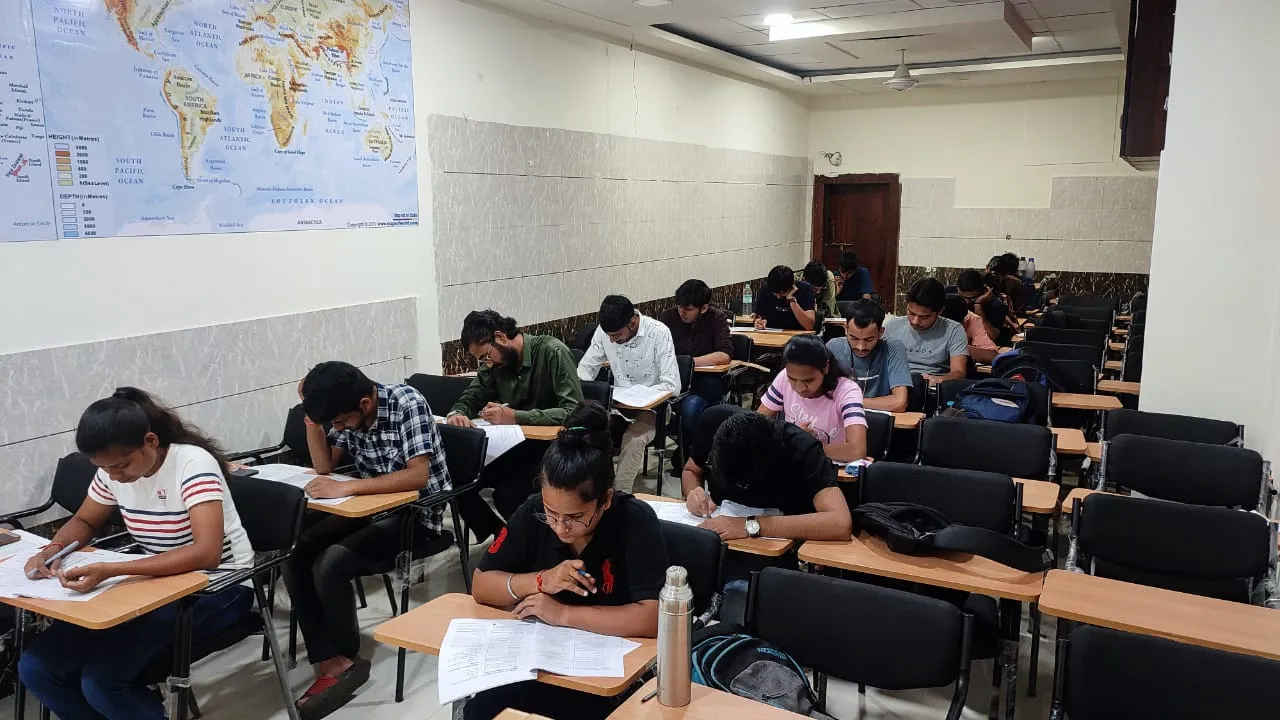
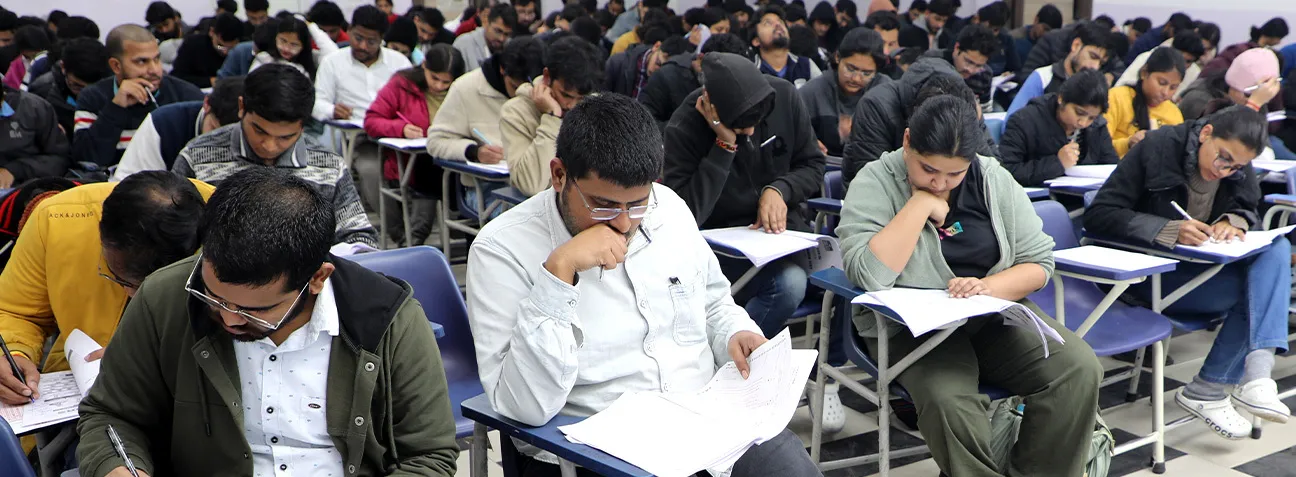
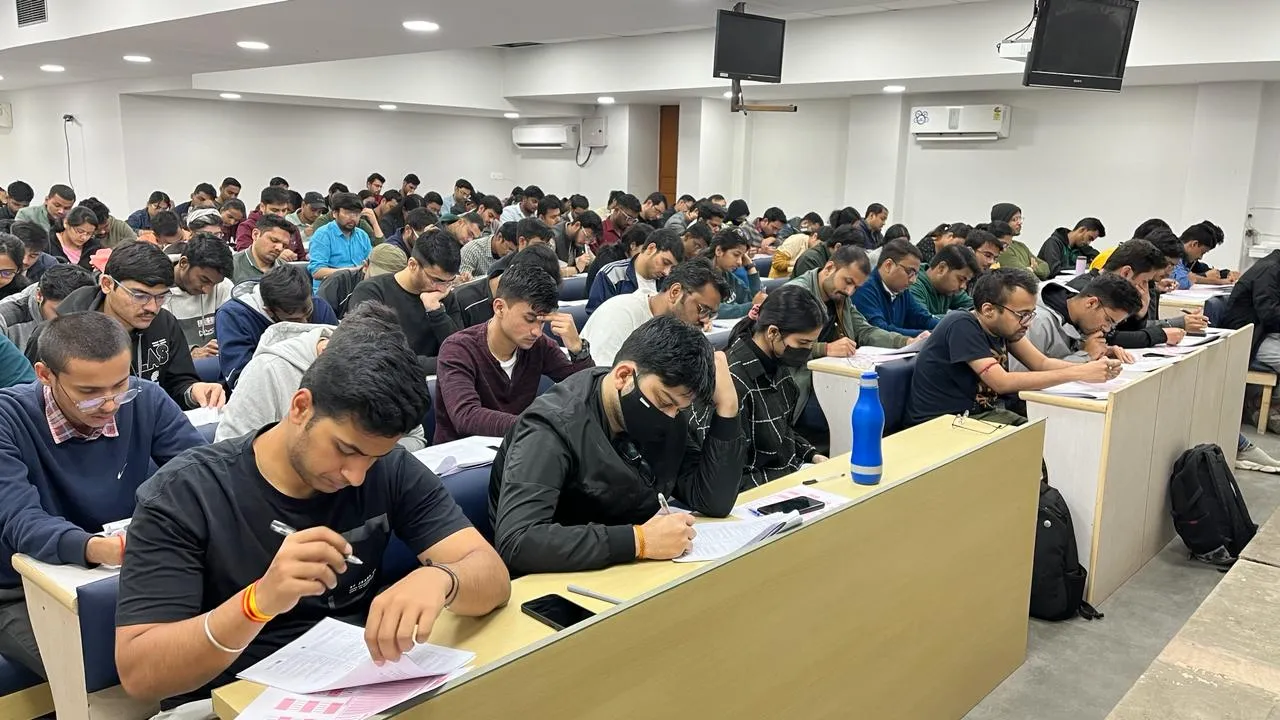
Real Exam Simulation
3 hours, 20 questions, strict word limits, balanced static–dynamic mix.
Analytical & Conceptual Testing
Prompts that require theory-to-practice application.
Detailed Evaluation & Feedback
Assessed on content relevance, structure, analysis, presentation.
One-on-One Mentorship
Faculty debrief on strengths, gaps, and improvement plan.
Comparative Performance & All-India Ranking
Percentiles, sectional scores, and benchmarking.
Who Should Attempt?
- Aspirants writing UPSC Mains 2026 needing a true exam simulation now
- Students with coverage but lacking speed, structure, or integration
- Candidates bridging thethe content ↔ expression gap through evaluation-driven improvement
- Serious aspirants targeting 300+ across GS with structured, mentored writing
- Exam-like environment across GS 1–4 & Essay
- PYQ-aligned design with strict word discipline
- Directive-wise, section-wise wise scoring and analysis
- Faculty debrief + individual mentorship for targeted fixes
- All-India benchmarking to locate your standing before Mains
For Mains 2026 Aspirants — Why Write in Oct 2025?
The All India Prelims Open Mock Test Series 2026 is a specially curated General Studies (GS) test series grounded in the analysis of Previous Year Questions (PYQs). Designed to mirror the actual UPSC Prelims pattern, it offers aspirants a realistic, high-pressure test environment before the real exam.
What makes it unique?-
Early Diagnostic = Better Year Plan:
- Get a baseline now; build month-wise corrective targets per paper.
-
Install Frameworks Gradually:
- Freeze directive compliance, answer structures, and ethics/essay templates well before crunch time.
-
Protect Mains Momentum During Prelims:
- With early writing, a weekly mini-mock keeps your Mains muscle active in the Prelims phase.
-
Peak on Time:
- Move from fixes → fluency → speed in a staged way, not a post-Prelims sprint.
-
Track What Matters:
- Attempt completion, directive hit-rate, value-add density (data/case/examples), finish quality (intro/conclusion).
CHAKRAVUY is not just a test—it's your final rehearsal before the exam.
Mains Open Mock Test Schedule
| Date | Mock Test | Registration |
|---|---|---|
| 23 Nov 2025 | Mock 1 (GS Paper 2) | Take Test |
| 07 Dec 2025 | Mock 2 (GS Paper 4) | Take Test |
| 21 Dec 2025 | Mock 3 (GS Paper 3) | Take Test |
| 04 Jan 2026 | Mock 4 (GS Paper 1) | Take Test |
| 18 Jan 2026 | Mock 5 (Essay 1) | Take Test |
| 01 Feb 2026 | Mock 6 (GS Paper 2) | Take Test |
| 01 Feb 2026 | Mock 7 (GS Paper 4) | Take Test |
| 08 Feb 2026 | Mock 8 (GS Paper 3) | Take Test |
| 08 Feb 2026 | Mock 9 (GS Paper 1) | Take Test |
| 15 Feb 2026 | Mock 10 (Essay 2) | Take Test |
GS Paper 1 — Indian Heritage & Culture, History, Society & Geography?
Aspirants’ Pain Points?- Narrative vs. Analytical Gap(cause–effect, continuity–change).
- Weak Thematic Linkages (Culture–Society–Polity–Economy).
- Underuse of Diagrams/Maps/Timelines.
- Time Management leading to incomplete last answers.
Why CHAKRAVUY (GS-1) ?
Evaluate your ability to synthesize culture, history, society, and geography under time pressure, with presentation-oriented feedback (maps, timelines, cause–effect frames).
Integrated Coverage (GS-1)
- Culture (art, architecture, literature) & social linkages
- Modern India & Post-Independence.
- World History (IR, revolutions, wars, decolonisation)
- Indian Society (diversity, women, poverty, urbanisation, social issues)
- Geography (physical/economic), resources, location factors, hazards, environment
GS Paper 2 — Governance, Constitution, Polity, Social Justice & IR
Aspirants’ Pain Points- Concept–Application Gap (Articles/doctrines → live governance issues).
- Directive Misreads (critically examine/evaluate/discuss/substantiate).
- Current Affairs Integration (overuse/underuse; poor balance).
- Structure & Conclusion weaknesses.
Why CHAKRAVUY (GS-2) ?
Replicate the real exam to test interpretation, structure, and current-linking; receive directive-wise feedback and concrete improvement pointers.
Integrated Coverage (GS-2)
- Constitution & Polity (federalism; E–L–J relations; bodies/tribunals)
- Governance & Social Justice (schemes, delivery, accountability, e-gov)
- Civil Services’ role, NGOs/PGs, rights issues
- International Relations (neighbourhood, groupings, diaspora, treaties, IOs)
GS Paper 3 — Economy, Agriculture, S&T, Environment, Security & DM ?
Aspirants’ Pain Points?- Data-Light Answers; weak policy currency
- Surface-level S&T without governance/economy/security links
- Environment–Economy one-sided arguments
- Security answers generic; few frameworks
Why CHAKRAVUY (GS-3) ?
Train to write evidence-rich, solution-oriented answers with diagrams/frameworks that integrate economy–agri–S&T–environment–security–DM.
Integrated Coverage (GS-3)
- Economy (growth, inclusion, budgeting, resource mobilisation, infra/investment)
- Agriculture (MSP, markets, tech, PDS, land reforms)
- S&T & indigenisation, space/defence, ICT/biotech & risks
- Environment & climate governance, biodiversity, EIA, pollution
- Disaster Management (risk reduction, institutional response)
- Internal Security (terror/organised crime links, cyber, media/social networks, borders)
GS Paper 4 — Ethics, Integrity & Aptitude ?
Aspirants’ Pain Points?- Conceptual Vagueness; over-moralising
- Case Studies: narrative drift; weak stakeholder–options–consequences
- Low Administrative Practicality
Why CHAKRAVUY (GS-4) ?
Practise crisp theory and framework-based case writing: Stakeholders → Dilemmas → Values → Options → Consequences → Justification.
Integrated Coverage (GS-4) ?
- Part A: Ethics & human interface; attitude/aptitude; EI; thinkers; public service values; probity, codes, transparency, work culture
- Part B: Case studies on administration, discretion, conflict of interest, accountability, service delivery
Essay — Philosophical, Social, Governance, Economy, Tech, Environment ?
Aspirants’ Pain Points?- Risky Topic Selection; thin ideation
- Weak Flow/Linkages; abrupt intros/conclusions
- Over-generalisation; Missing Counter-views & Evidence
Why CHAKRAVUY (Essay) ?
Full-length rehearsal to refine topic selection, outlines, coherence, balance, and expression, with line-by-line feedback on structure, examples, and language.
What You Practise (Essay) ?
- Decoding prompts & safe selection
- Mind-mapping & dimensioning (ethical/historical/economic/tech/environment/IR)
- Structure (intro–body–conclusion), transitions
- Content tools (quotes, anecdotes, constitutional ideals, committees, data, caselets)
- Language (clarity, neutrality, cadence)
How to Register and Attempt Mock Test?
To excel in the UPSC Prelims 2026, it is crucial to prepare as per the demand of the UPSC and it can be understood through the Previous Year Questions (PYQs). Utilizing GS SCORE's All India Prelims Mock Test Series 2026 based on the themes of the PYQs, you can achieve this goal efficiently while evaluating your performance on All India Level. Follow this structured approach to enhance your preparation: It includes:
- Click on Register Now for each mock test before the registration closes.
- Attempt the test on the given date offline/online. The test papers have been designed on similar lines to the UPSC and PYQ themes.
- After each test, there will a discussion and mentorship session for each mock test where you can clear your doubts directly from the faculty. supplementary notes, filling in any knowledge gaps.
- Use dedicated groups for doubt solving, mentorship, and peer learning. These provide support, diverse perspectives, and collaborative learning to enhance your preparation.
- Dedicated Group for peer learning and discussions. Click to Join Group.
By following these steps, you can effectively utilize the GS SCORE mock test papers to reinforce your knowledge and improve your performance in the UPSC Mains 2026.


 Courses
 Study
Notes
Study
Notes Home
Home Resources
 More
More